

Padel Levels Explained: What Your Playtomic Level Means
The short answer. Most clubs and booking apps use Playtomic's scale, which runs from 0 to 7. Below 1.5 you are a beginner, 2.5 to 4.4 is the broad middle where most club players sit, 4.5 and above is advanced, and from about 5.5 you are a tournament player. The number moves with your match results, so it is a tool for finding even matches and not a grade.
Padel level chart (0 to 7)
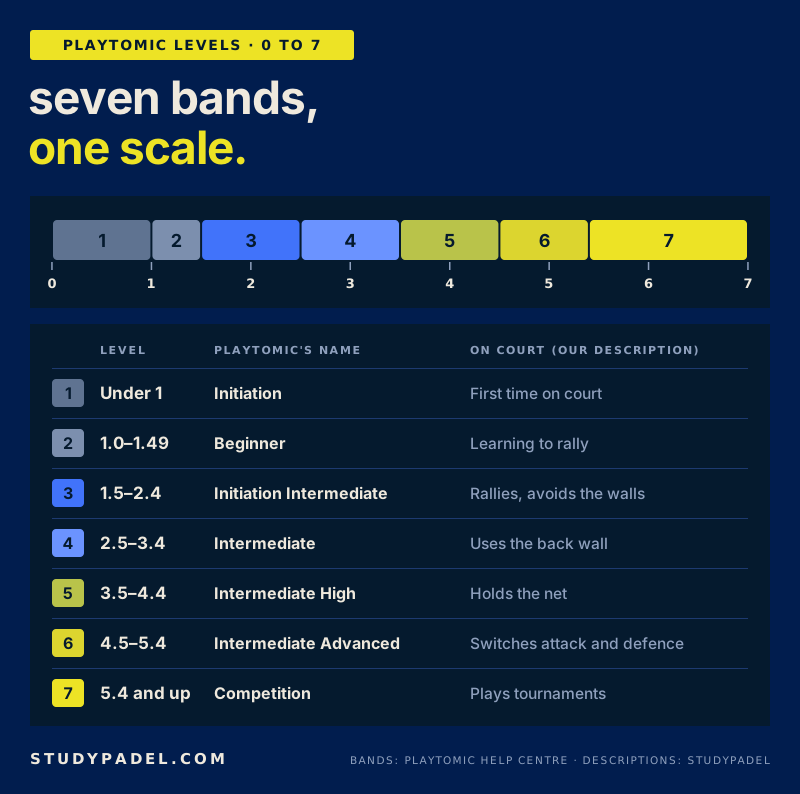
The ranges and names in the first column come from Playtomic's help centre. Everything to the right of it is our own description of what players at that level typically look like. It is not Playtomic's wording and it is not official.
| Level (Playtomic's name) | What you can do | What you are working on | A match you would enjoy |
|---|---|---|---|
| Under 1 (Initiation) | Hit the ball over the net some of the time | Grip, underarm serve, the rules | A lesson or a beginners' session |
| 1.0–1.49 (Beginner) | Serve in and keep a short rally going | Consistency, moving as a pair | Friendly games with other beginners |
| 1.5–2.4 (Initiation Intermediate) | Rally from the back, volley a slow ball | Letting the ball come off the back wall | Social matches at a relaxed pace |
| 2.5–3.4 (Intermediate) | Use the back wall, lob on purpose, come to the net | The side wall, overheads, staying at the net | Level-matched open matches |
| 3.5–4.4 (Intermediate High) | Hold the net, play a bandeja, defend the lob | Wall combinations, the vibora, fewer unforced errors | Club leagues and local tournaments |
| 4.5–5.4 (Intermediate Advanced) | Switch between attack and defence, finish points overhead | Tactics, speed, playing under pressure | Regional tournaments |
| 5.4 and up (Competition) | Compete in tournaments | Everything, at speed | Federation tournaments |
Playtomic's own list stops at “Competition”, around 5.5. The top of the scale, 6 and 7, is not described on the page we read.
What each level looks like on court
Under 1.5: learning the game. Points are short and usually end with a miss. Players stand at the back, serve carefully and are surprised when the ball comes off the glass. The step up comes from getting the ball back three or four times in a row.
1.5 to 2.4: rallying. Rallies last. Players can hit forehands and backhands from the back and block a slow volley. The walls are still something to avoid: most balls are taken before they reach the glass, often on the run.
2.5 to 3.4: using the court. This is the first big change. Players let the ball pass and play it off the back wall, lob deliberately to win the net, and understand that the pair at the net is winning the point. A basic volley is reliable. Overheads are not.
3.5 to 4.4: holding the net. Players get to the net and stay there. They answer a lob with a bandeja to keep position, defend off the side wall and back wall together, and make far fewer free errors. Matches start to be decided by who makes the other pair uncomfortable.
4.5 to 5.4: attacking and defending. Playtomic describes this band as players who know how to switch between attack and defence. On court that means a vibora with intent, a smash that ends points, lobs that land deep under pressure, and a pair that moves as one.
5.4 and above: competing. Tournament players. The shots are all there, and the differences are speed, fitness and decisions.
How Playtomic levels work
Playtomic explains its system in its help centre. Four things matter.
- You start with a questionnaire. When you create a profile you answer questions about your experience, and the app gives you a starting level. You can only do this once. Playtomic calls the result an estimate.
- After that, only results count. Your level is recalculated after every competitive match. The app takes the average level of each pair, works out which pair was expected to win, and compares that with what happened.
- Who you beat matters. Beating a higher-rated pair raises your level more than beating a pair at your own level. Losing works the same way in reverse.
- Reliability decides how far you move. Next to your level is a percentage. It rises as you play more competitive matches. While it is low, the app is still working out how good you are, and each result moves you a long way. Once it is high, changes are small.
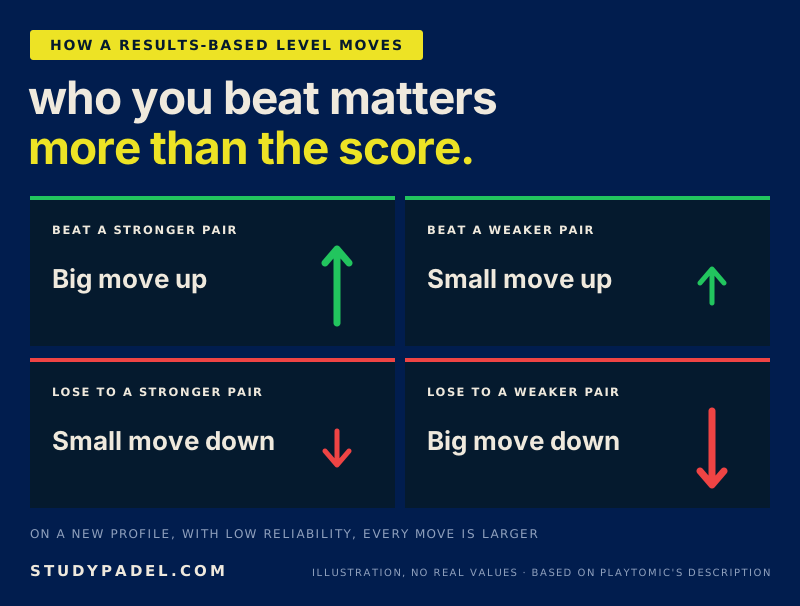
Two practical points follow.
- Friendly matches never change your level. When you create a match you choose competitive or friendly. Only competitive matches count, and you cannot switch the type afterwards.
- Your first few matches matter most. With low reliability, a few early wins or losses can move you a long way. That settles down.
Why your level feels wrong
It often is a little wrong, for reasons that have nothing to do with you.
- The pool is small. A level only means something relative to the people you have played. In a new club where everybody joined last month, all the numbers are guesses. Players who move between countries report the same thing: a 3.5 in an established padel city is not a 3.5 in a market that opened last year.
- The starting level is self-assessed. Some people are modest in the questionnaire and some are not.
- Your partner counts. The app works from the pair's average. A strong partner can carry you up, and a mismatched one can take you down.
- Some people manage their number. Players who keep their level low to win easy matches exist in every rating system.
None of that makes the number useless. It makes it approximate. Treat your level as a way to find a good match on a Tuesday night, and judge your progress by the things in the chart above.
Other level systems
Playtomic's scale is the most widely used, but it is not the only one.
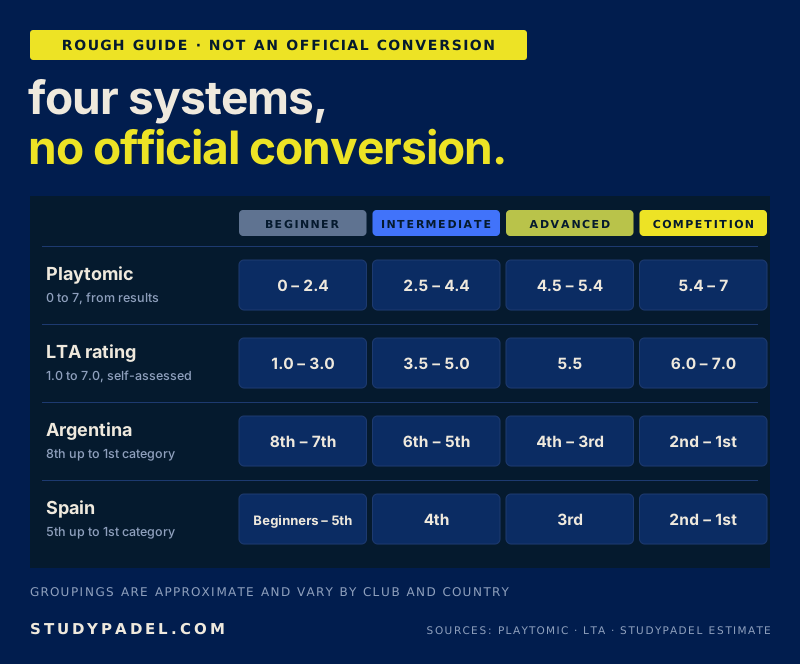
LTA Padel Rating (Great Britain). The LTA has its own rating, and it works differently: you pick the statement that describes you. “I am a beginner who is still working on getting the ball in play” is 1.0. “I am pretty consistent and can use tactics like playing off the wall” is 3.0. Competent tennis and squash players who are new to padel start at 3.5. An experienced tournament player is 5.0 and a nationally ranked player 5.5. Above that, 6.0 to 7.0 is set by world ranking: a 7.0 is a man inside the top 150 or a woman inside the top 50.
Argentina: categories. Argentine clubs and tournaments use categories that run from 8th, for beginners, up to 1st, the top amateurs. Players write them 8va, 7ma, 6ta and so on.
Spain: categories. Spanish club and amateur tournaments are split into numbered categories, with 1st the strongest. Most run from 1st down to 4th or 5th, often with a beginners' group, but the number varies by organiser and region.
Federation rankings. These are a different thing again. A ranking counts points won in tournaments. The LTA's padel ranking, for example, is built from a player's best six results in the previous 52 weeks. It tells you who has won most, not how good a club player is.
Why there is no conversion table. Each system has its own pool of players and its own method. One is calculated from results, one is self-assessed and two are decided by tournament organisers. Our chart lines them up by their own labels, and nothing more than that should be read into it.
How long does it take to go up a level?
Nobody has published data on this, so anyone who gives you a number of months is guessing.
What can be said is what speeds it up: playing two or three times a week, taking lessons early so you do not build habits you have to undo, and playing competitive matches against people slightly better than you. The step from 2.5 to 3.5 is mostly about the walls and the net. The step from 3.5 to 4.5 is mostly about overheads and errors.
Our guide on how to improve in padel as a beginner covers the first of those steps. When you want to test yourself, see playing your first padel tournament.
What level are the pros?
They are off the scale, and they do not use it. Professionals are ranked by the points they win at FIP and Premier Padel tournaments.
On StudyPadel we also give every professional an Elo rating. It follows the same idea as a results-based app level: your rating rises more for beating a stronger pair than a weaker one. It is a separate scale, though, so a pro's Elo number cannot be turned into a Playtomic level. You can browse the rated players on our players page.
Quick answers
What do Playtomic levels mean?
They place you on a scale from 0 to 7 so the app can match you with players of similar ability. Playtomic's bands run from Initiation, under 1, to Competition, around 5.5.
How do I find out my padel level?
Answer the questionnaire in a booking app such as Playtomic, or read the LTA's rating statements and pick the one that fits. Then play a few competitive matches: the results will correct the starting estimate.
Is level 3 good in padel?
Yes, for a club player. Playtomic calls 2.5 to 3.4 Intermediate: players with more developed skills and a basic understanding of tactics. In practice you can rally, use the back wall and play at the net.
What is a 3.5 padel rating?
On Playtomic, 3.5 is the start of the Intermediate High band, for players who are more confident and use better strategies. On the LTA's scale, 3.5 is where competent tennis and squash players new to padel begin.
Is level 5 good in padel?
Very. On Playtomic, 4.5 to 5.4 is Intermediate Advanced, the last band before Competition. A level 5 player would be among the strongest at most clubs.
What is level 7 in padel?
The top of Playtomic's scale. Playtomic's published band list ends at Competition, around 5.5, so in practice 7 means the level of the very best players.
How do you get a level on Playtomic?
Create a profile and complete the level questionnaire, which gives you a starting level. From then on it changes only when you record the result of a competitive match.
Sources
- Playtomic help centre: the Playtomic levels and algorithm. The 0–7 scale, the band names and ranges, the questionnaire and reliability.
- Playtomic help centre: how the level system works. The starting assessment, reliability and competitive matches.
- Playtomic help centre: the Playtomic levels, ups and downs. How results and opponents' levels move a level.
- Playtomic help centre: friendly vs competitive matches. Which matches count.
- LTA: what is my padel rating? The LTA Padel Rating statements.
- LTA: how padel rankings are calculated. Best six results in 52 weeks.