

Padel Court Dimensions: Size, Height and Layout (With Diagram)
The short answer. A padel court is 20 metres long and 10 metres wide (65 ft 7 in × 32 ft 10 in), measured inside the walls. The net is 88 cm high in the centre. The walls are 3 to 4 metres high, and the court needs at least 6 metres of clear height above it. These figures come from the FIP Rules of Padel, 2026 edition.
Padel court dimensions at a glance
| Metric | Imperial | |
|---|---|---|
| Playing area, inside the walls | 20 × 10 m | 65 ft 7 in × 32 ft 10 in |
| Area | 200 m² | 2,153 sq ft |
| Service line from the net | 6.95 m | 22 ft 10 in |
| Service line to the back wall | 3.05 m | 10 ft |
| Line width | 5 cm | 2 in |
| Net height | 0.88 m centre, 0.92 m at the posts | 34.6 in, 36.2 in |
| End walls | 4 m (3 m wall + 1 m mesh) | 13 ft 1 in |
| Side walls | 3 m, rising to 4 m at the ends | 9 ft 10 in, 13 ft 1 in |
| Clear height | 6 m minimum, 8 m recommended | 19 ft 8 in, 26 ft 3 in |
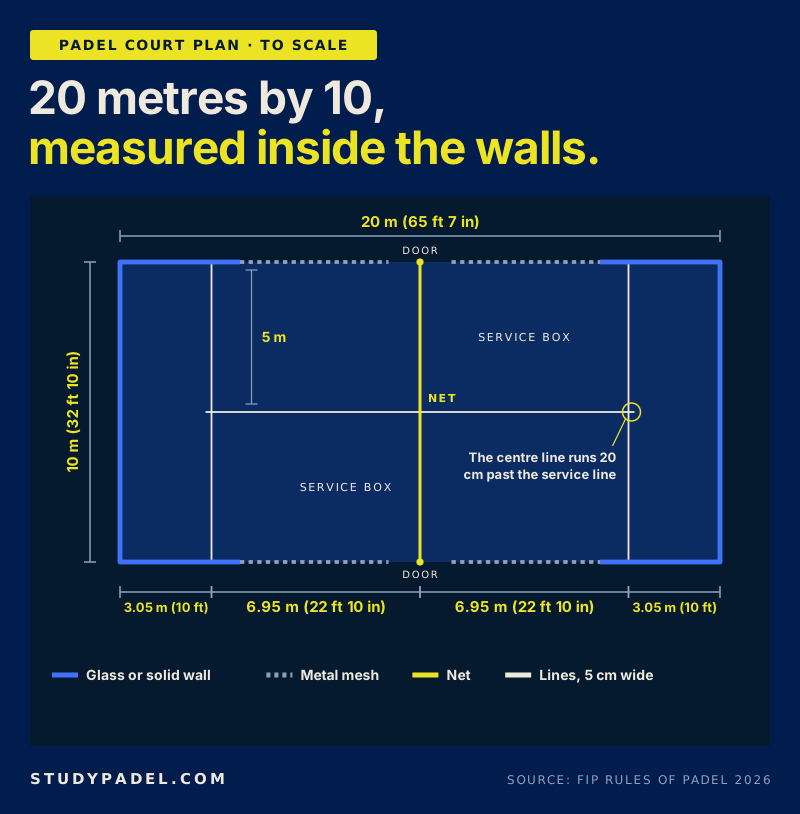
The 20 × 10 m is an interior measurement. The rules allow a tolerance of 0.5%, which is 10 cm on the length and 5 cm on the width. Builders ask about this more than anything else: the glass and steel sit outside those numbers.
The lines and service boxes
A padel court has very few lines.
- Two service lines run across the court, parallel to the net and 6.95 m (22 ft 10 in) from it. That leaves 3.05 m (10 ft) between each service line and the back wall.
- One centre service line on each side divides the area between the net and the service line into two service boxes. Each box is 6.95 m deep and 5 m wide.
- The centre line runs at least 20 cm (8 in) past the service line and stops. There is no centre line between the service line and the back wall.
- Every line is 5 cm (2 in) wide, preferably white or black.
The two halves of the court must be exactly symmetrical. How the boxes are used is covered in our padel rules guide.
The net
The net is 10 m (32 ft 10 in) long. It is 0.88 m high in the centre and rises to 0.92 m at the posts, with a tolerance of 5 mm. The posts, or the part of the court structure that holds the net, may be no more than 1.05 m (3 ft 5 in) high.
That makes a padel net slightly lower than a tennis net, which is 0.914 m in the centre.
The walls and mesh: height and the two side-wall layouts
The court must be completely enclosed.
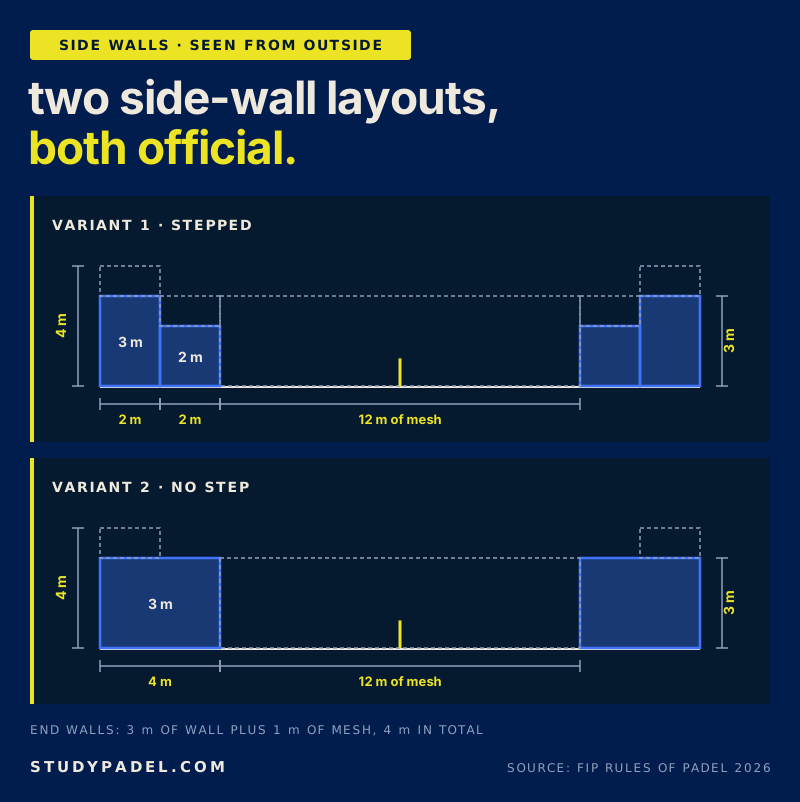
The ends are 4 m high in total. The first 3 m are wall, which can be glass or any solid material, and the last metre is metal mesh.
The sides can be built in two ways, and both are official.
| Wall at each end of the side | Mesh | |
|---|---|---|
| Variant 1, stepped | 3 m high for the first 2 m, then 2 m high for the next 2 m | Up to 4 m over the last 2 m at each end, up to 3 m over the central 16 m |
| Variant 2, glass with no step | 3 m high for 4 m | Up to 4 m over the last 2 m at each end |
Most new courts are variant 2, with glass throughout. So-called panoramic courts are the same layout with fewer steel posts between the panes.
The mesh must be square, with openings that measure between 5 and 7.08 cm across the diagonal.
How high does the ceiling need to be?
At least 6 metres (19 ft 8 in) over the whole court, with nothing hanging into that space. For new facilities the rules suggest 8 metres (26 ft 3 in).
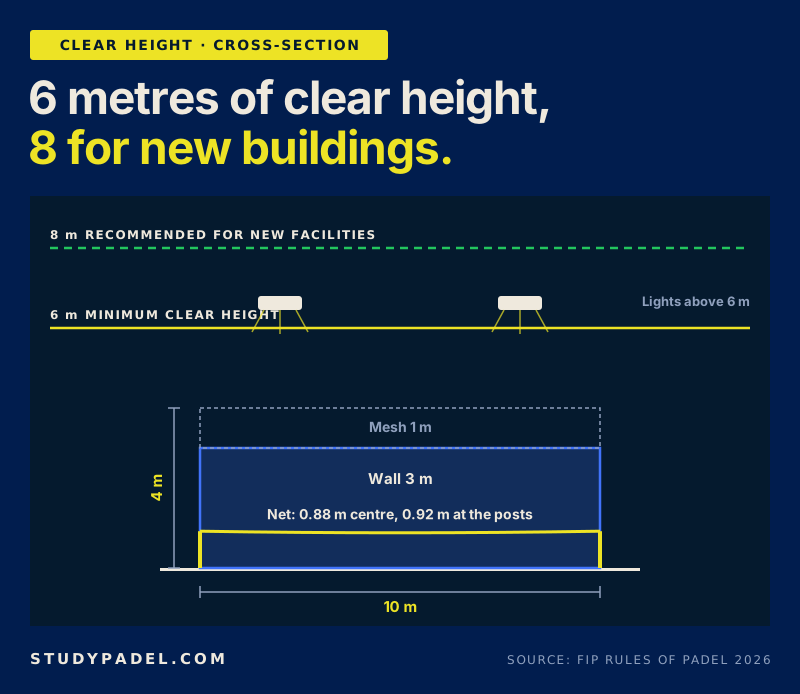
So a building with a 7-metre ceiling meets the rule but falls short of the recommendation. Lights count as obstructions: outdoors they must be mounted at least 6 m above the ground, on poles outside the court.
In the UK, the LTA's court guidance also asks for a minimum 6 m of clear space under the light fittings.
Doors and out-of-court play space
Players enter through openings in the side mesh, next to the net.
| Access | Minimum opening | Maximum opening |
|---|---|---|
| One per side | 1.05 × 2.0 m | 2.20 × 2.20 m |
| Two per side | 0.72 × 2.0 m | 1.10 × 2.20 m |
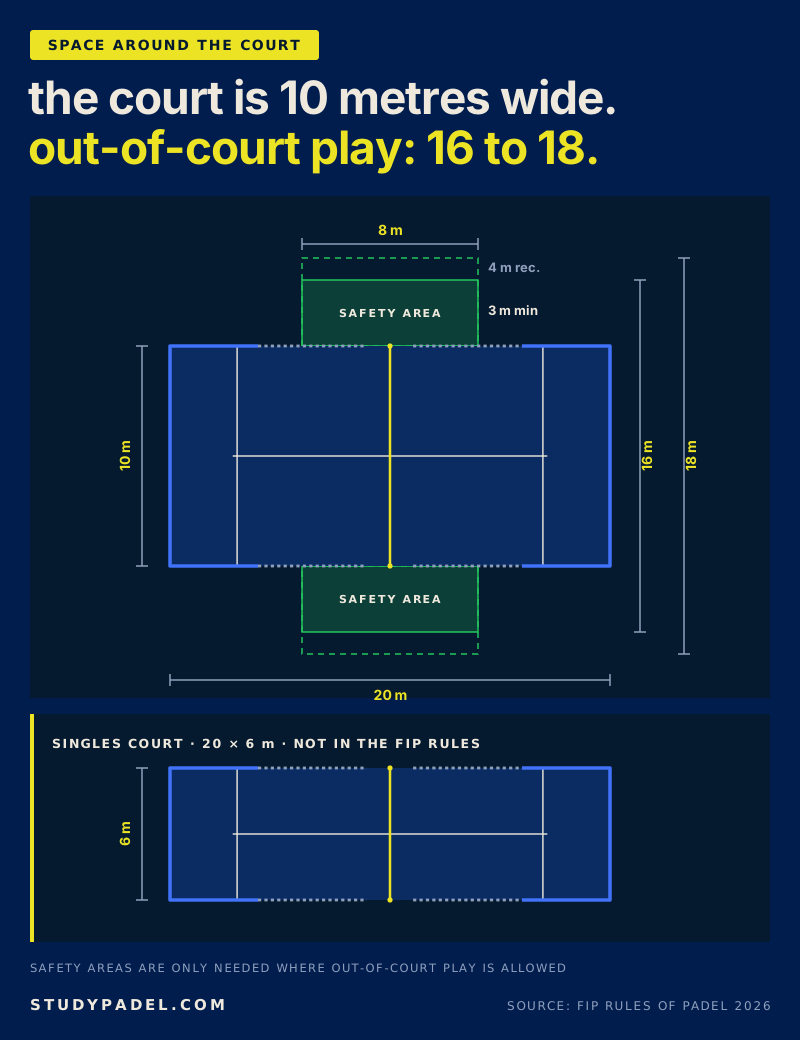
At professional level players are allowed to run out through those doors to return a ball. A court only qualifies for that if it has two openings on each side and a clear area outside them: no obstacles within at least 3 m of the court (4 m recommended), for 4 m either side of the net, to a height of 3 m.
The LTA's guidance for British venues is slightly different: an area no less than 2 m wide (3 m for competition), 4 m long on either side and 4 m high. If you are building in the UK, follow the LTA figure. The LTA also notes that new 3 m and 4 m walls need planning consent.
Singles padel court size
A singles court is 20 m long and 6 m wide (65 ft 7 in × 19 ft 8 in): the same length, net and service lines as a full court, but 4 m narrower.
There is no official singles court. The FIP rules describe a doubles court only, and the 20 × 6 m size is a convention among builders and clubs. Our guide to singles padel covers how it is played.
How much space do you need to build a padel court?
More than 20 × 10 m, because that is only the inside.
- The court and its structure: plan for about 21 × 11 m (69 × 36 ft). Suppliers typically quote a concrete base of at least 20.5 × 10.5 m, and some court types need a little more width, so check with your builder.
- With out-of-court play: add the clear areas on both sides. That makes the plot 16 m wide at the minimum and 18 m at the recommended size, over the 8 m around the net.
- Indoors: 6 m of clear height, 8 m if you can.
- Outdoors: the rules recommend running the long axis north to south, somewhere between north-north-east and north-north-west, so nobody plays into a low sun.
What a court costs depends mainly on the type, panoramic or standard, and on the groundwork. That is outside this article.
Padel vs tennis vs pickleball court size
| Court | Playing area | |
|---|---|---|
| Padel | 20 × 10 m (65 ft 7 in × 32 ft 10 in) | 200 m² |
| Tennis, doubles | 23.77 × 10.97 m (78 × 36 ft) | 261 m² |
| Pickleball | 13.41 × 6.10 m (44 × 20 ft) | 82 m² |
A tennis court also needs run-off behind and beside the lines, which padel does not, because the walls are the boundary. Two tennis courts side by side give room for three padel courts. One tennis court on its own is too narrow for two. The details are in our padel vs tennis and padel vs pickleball comparisons.
For how many courts exist and where, see padel courts worldwide.
Court surface and colours
The floor may be cement, a synthetic material or artificial grass, as long as the ball bounces evenly. Almost all modern courts use artificial grass dressed with sand. The permitted colours are green, blue and terracotta, and the whole court must be one colour.
Quick answers
What is the size of a padel court?
20 metres long by 10 metres wide, or 200 m². That is measured inside the walls, with a tolerance of 0.5%.
How big is a padel court in feet?
65 ft 7 in long by 32 ft 10 in wide, which is 2,153 square feet.
Is a padel court bigger than a pickleball court?
Yes. A padel court is 200 m² and a pickleball court is about 82 m², so the padel court is almost two and a half times the size.
Is a tennis court bigger than a padel court?
Yes. A doubles tennis court is 23.77 × 10.97 m, about 261 m² against padel's 200 m², and it needs extra run-off space around it.
Are all padel courts the same size?
All official courts are 20 × 10 m. What varies is the side-wall layout, the number of doors and whether the court is glass throughout. Singles courts, at 20 × 6 m, are the exception, and they are not in the official rules.
How high does a padel court ceiling need to be?
At least 6 metres over the whole court. The rules recommend 8 metres for new facilities.
How many square metres do you need for a padel court?
About 230 m² for the court and its structure, which is roughly 21 × 11 m. With the clear areas for out-of-court play, plan for a plot 16 to 18 m wide.
Sources
- FIP Rules of Padel, 2026 edition. The Court: dimensions, net, enclosure, surface, accesses, safety area, lighting and orientation.
- LTA Padel Court Guidance. The British safety-area figures, clear height and planning consent.
- Padel Addict: the sizes of a padel court. Singles court size and concrete base.
- ITF Rules of Tennis 2026 and the USA Pickleball rulebook. Tennis and pickleball court sizes.

