

How Many Padel Courts Are There? World, UK and Top Countries (2026)
The world had more than 77,000 padel courts in the middle of 2025, in 150 countries. About 26 new ones were being finished every day. Spain has more than a fifth of them, but the building has moved elsewhere: France is adding more courts than anyone, Britain has doubled its total in 17 months, and North America’s count doubled in a year and a half. Here is where the courts are, where they are coming, and where the building has stopped.
The numbers in one place
| Courts worldwide (FIP, June 2025) | 77,355 |
| Clubs and facilities (FIP, October 2025) | 24,627 |
| Countries where padel is played | 150, plus 20 territories |
| New courts in 18 months | 14,355 (+22.8%) |
| Average courts per club | 3.1 |
| Countries with more than 100 courts | 49 (35 a year earlier) |
| Players (FIP estimate) | more than 35 million |
Source: International Padel Federation, World Padel Report 2025.
Two counts, and why they differ
There are two serious counts of the world’s padel courts, and they do not agree.
- The International Padel Federation (FIP) reports 77,355 courts in June 2025. It surveys national federations, adds its own research and counts every facility where padel can be played, including hotels and residential complexes.
- Playtomic and the consultancy Strategy& report 58,334 courts at the end of 2025 in their Global Padel Report 2026. They build the figure up from clubs.
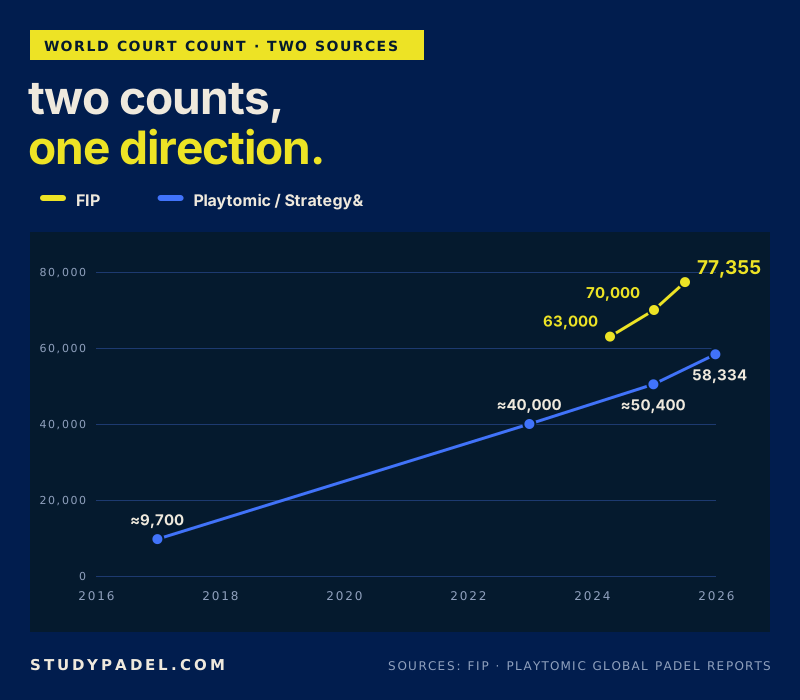
The gap is one of method, and the same split shows up in player numbers: FIP estimates 35 million players, Playtomic 19.4 million. What matters for this article is that both sources describe the same trend. Playtomic counts 7,898 new courts and 4,969 new clubs in 2025, growth of 16 percent. FIP measures 15 percent a year. Playtomic says the world has six times as many courts as in 2016.
The country figures below are FIP’s, because FIP publishes them for every nation.
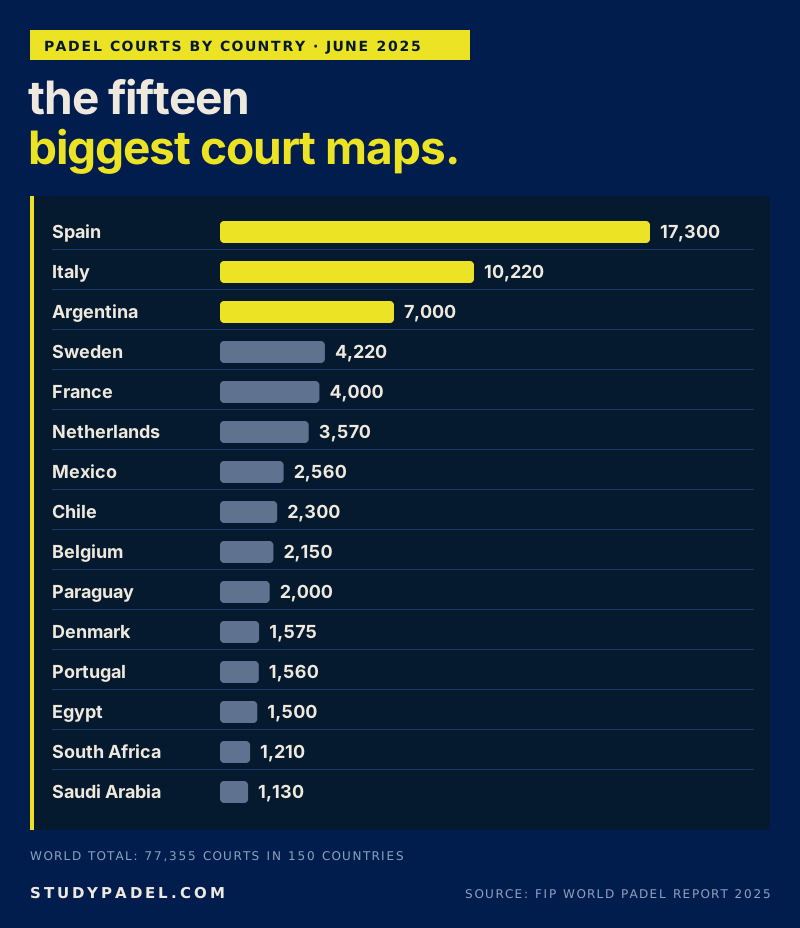
The 15 countries with the most courts
| Rank | Country | Courts | Clubs | Courts per club |
|---|---|---|---|---|
| 1 | Spain | 17,300 | 4,575 | 3.8 |
| 2 | Italy | 10,220 | 3,795 | 2.7 |
| 3 | Argentina | 7,000 | 3,100 | 2.3 |
| 4 | Sweden | 4,220 | 1,200 | 3.5 |
| 5 | France | 4,000 | 1,290 | 3.1 |
| 6 | Netherlands | 3,570 | 766 | 4.7 |
| 7 | Mexico | 2,560 | 720 | 3.6 |
| 8 | Chile | 2,300 | 650 | 3.5 |
| 9 | Belgium | 2,150 | 560 | 3.8 |
| 10 | Paraguay | 2,000 | 500 | 4.0 |
| 11 | Denmark | 1,575 | 546 | 2.9 |
| 12 | Portugal | 1,560 | 455 | 3.4 |
| 13 | Egypt | 1,500 | 500 | 3.0 |
| 14 | South Africa | 1,210 | 388 | 3.1 |
| 15 | Saudi Arabia | 1,130 | 440 | 2.6 |
Just outside the list are Finland (1,100), Great Britain (1,080 in mid-2025), Brazil (1,000), the United Arab Emirates (950), Germany (875) and the United States (770). Ranked players and national-team results for each country are on our padel by country pages.
A few things in the table are worth a second look.
- Spain is in a class of its own. It has more courts than the next two countries combined, and more than 6 million players. Even so, its largest chain runs only about 255 courts. Spanish padel is still mostly thousands of independent clubs.
- Argentina’s clubs are small. At 2.3 courts per club it has the smallest clubs in the top 15, a legacy of the neighbourhood clubs of its boom in the late 1980s and 1990s.
- The Dutch build big. With 4.7 courts per club, the Netherlands has the largest clubs of any major country. Most Dutch padel is played at tennis clubs that added a block of courts.
- Two African countries are in the top 15. Egypt and South Africa hold more than 80 percent of the continent’s facilities between them.
Courts per person: a different ranking
Total courts reward big countries. Divide by population and the order changes.
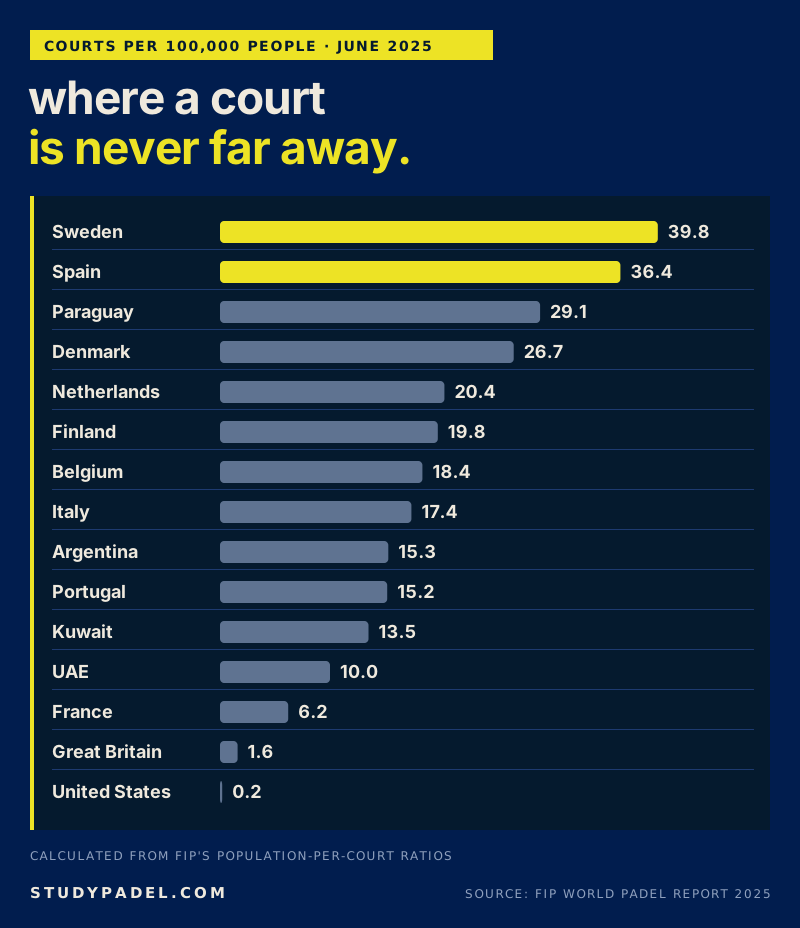
Sweden is still the most densely equipped padel country on earth, even after the wave of bankruptcies that followed its boom. Paraguay and Denmark are the surprises: two small countries with more courts per person than Italy or Argentina.
The bottom of the chart is the interesting part for anyone asking where padel goes next. Italy has almost three times as many courts per person as France. On these mid-2025 figures Spain had more than twenty times as many as Britain (about 13 times on Britain’s May 2026 count). The United States is barely on the scale.
By continent: Europe has the courts, the rest has the growth
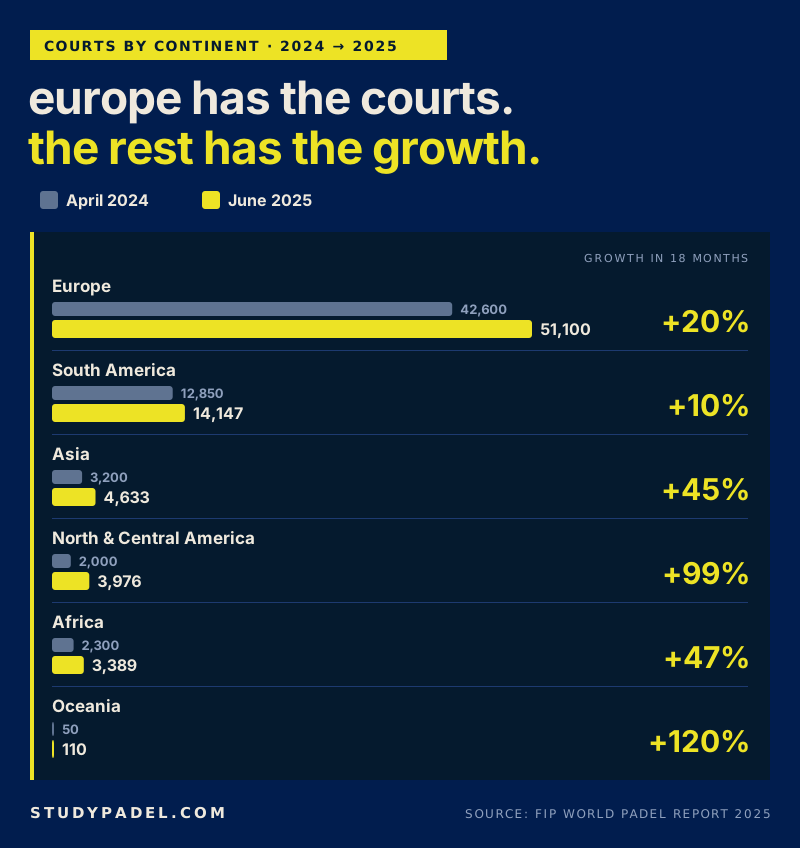
Europe (51,100 courts, 66 percent of the world). In 2020 Europe had about 18,000 courts. It has added 33,000 in five years. The first three years of that were Italy and Sweden. Since then growth has moved to France, Britain and Germany. Smaller countries are joining in: Switzerland added about 400 courts in 18 months, Greece and Austria about 300 each, Lithuania and Cyprus about 200. Every one of Europe’s 50 countries now has at least one club. For the 2024 snapshot, see the state of padel in Europe.
South America (14,147). The oldest padel continent outside Europe is growing slowly, at 10 percent. Argentina, Chile and Paraguay hold most of the courts. Colombia is approaching 500, and Venezuela and Ecuador have passed 300 each.
North and Central America (3,976). The count doubled in 18 months. Mexico has about two thirds of it. The United States passed 650 courts at the start of 2025 and 770 by the middle of the year, in 31 states. Florida has 41 percent of American courts, Texas 18 percent and California 10 percent.
Asia (4,633). Asian padel used to mean the Gulf. In the previous FIP report 89 percent of Asian facilities were in the Middle East. Now it is 72 percent. Saudi Arabia leads with 1,130 courts, ahead of the UAE with about 950 and Kuwait with 600. The new story is Indonesia, where Playtomic counts almost 800 courts added in 2025 alone. (FIP estimated just 350 in total in mid-2025; the counts differ.)
Africa (3,389). Padel is now played in 40 African countries, 16 more than in the previous survey. Egypt was first and has about 1,500 courts. South Africa has built more than 1,200 in a few years. Morocco and Tunisia have passed 100 each.
Oceania (110). Australia has about 80 courts. It is the last large sporting country where padel has barely started.
Who is building fastest right now
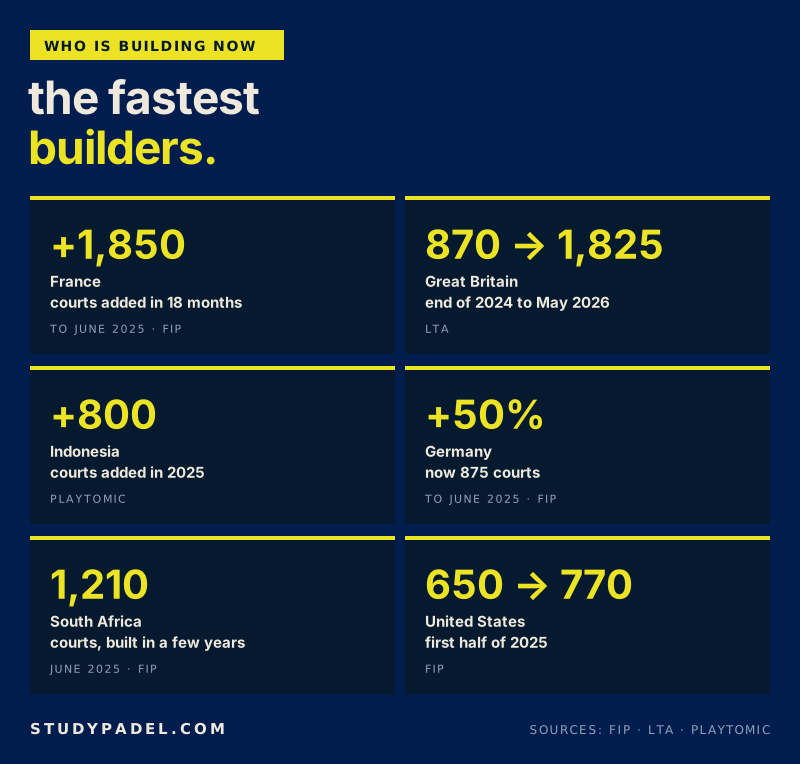
- France installed more courts than any other country in the 18 months to mid-2025, about 1,850, and Playtomic says it led the world again across 2025. The French tennis federation lends its clubs the money for new courts at zero interest.
- Great Britain had 69 courts in 2020, 870 at the end of 2024 and 1,825 at 551 venues in May 2026, when the LTA said 1 million people now play. Peak-hour occupancy at British clubs is about 85 percent, and half of players say they struggle to book.
- Germany grew by half in 18 months and is converting tennis clubs in large numbers.
- Indonesia and South Africa are the two markets outside Europe and the Americas where padel has moved from novelty to mass building.
- The United States is growing fast from a tiny base. Planning rules, import costs and the popularity of pickleball have slowed it, but half of all American courts were built after January 2024.
Where the building has stopped
Not every market is growing. FIP describes Italy as consolidating after its boom. It says the Netherlands, Belgium and Denmark are growing moderately, that Norway (600 courts) and Finland (1,100) spent 2024 consolidating, and that Sweden is “not yet showing signs of recovery”.
Playtomic goes further and groups Sweden, Finland and Chile as markets where too many courts were built too soon. In Chile about 80 clubs closed in 2024 and monthly bookings fell 27 percent. In Finland only about 41 percent of peak hours are booked.
The lesson the industry has taken is that a court is only worth building if it gets played on. Playtomic’s 2026 report found that the best-run clubs earn about €3,500 per court per month and the weakest about €736, in the same countries. Court bookings make up 68 percent of an average club’s income, and the difference comes from coaching, leagues and tournaments.
When will the world reach 100,000 courts?
Forecasts are hard. In 2023 Deloitte and Playtomic expected about 85,000 courts by 2026, starting from 40,000. Playtomic’s own count reached 58,334 at the end of 2025; FIP’s broader count was already at 77,000 by mid-2025.
If FIP’s measured pace of about 15 percent a year holds, the 100,000th court would be built during 2027. On Playtomic’s narrower count, at 16 percent a year, it would come around 2029. That is our arithmetic, not a FIP forecast, and it depends on France, Britain, Germany and the United States continuing to build while the mature markets stand still.
The room is there. If Britain alone reached Italy’s courts-per-person level, it would need about 12,000 courts. It has 1,825.
To see why people fill these courts in the first place, read why padel is growing so fast. For the countries turning courts into players, see the padel nations coming up behind Spain, Argentina and Italy.
Quick answers
How many padel courts are there in the world? FIP counted 77,355 in June 2025. Playtomic, which counts in a different way, reported 58,334 at the end of 2025.
Which country has the most padel courts? Spain, with about 17,300. Italy is second with 10,220 and Argentina third with 7,000.
Which country has the most padel courts per person? Among the large padel countries, Sweden: one court for every 2,515 inhabitants. Spain has one for every 2,745.
How many padel courts are there in Spain? About 17,300 at around 4,570 clubs in mid-2025, according to FIP: more than a fifth of all the padel courts in the world.
How many padel courts are there in the UK? Great Britain had 1,825 padel courts at 551 venues in May 2026, according to the LTA, up from 1,553 at the end of 2025, 870 at the end of 2024 and 69 in 2020.
How many padel courts are there in the United States? More than 770 in mid-2025, according to FIP, with 41 percent of them in Florida.
How fast is the number of padel courts growing? By about 15 to 16 percent a year. That is roughly 8,000 to 9,600 new courts a year, or 22 to 26 a day.
Sources
- International Padel Federation: World Padel Report 2025 (world, continent and country court and club counts for June and October 2025, growth since April 2024, population-per-court ratios, regional commentary).
- Playtomic and Strategy&, Global Padel Report 2026, as reported by Padel Addict, PADEL1969 and Club + Resort Business.
- Playtomic Global Padel Report 2025, as summarised by PADEL1969 (courts built in 2024, United States figures).
- Monitor Deloitte and Playtomic, Global Padel Report 2023, as reported by Realtid (40,000 courts in 2022, forecast of 85,000 by 2026).
- LTA: one million padel players in Britain (May 2026). The Padel Paper: LTA participation figures for 2025.
- Fédération Française de Tennis: Boost Padel programme.