

Padel Ball Pressurizers: Do They Work and Are They Worth It?
A can of padel balls costs €5 or €6 and is past its best within a couple of weeks of being opened. A pressurizer is a container that keeps opened balls under pressure so they hold their bounce for longer. The idea is sound and the physics is simple. The claims are another matter: depending on the maker, your balls will last 30 percent longer or ten times longer. This guide explains what a pressurizer does, what it cannot do, and how to work out whether one is worth it for you.
The short version
- What it is: an airtight tube or box that you pump up with your used balls inside.
- Does it work? For keeping the bounce between sessions, yes. For reviving dead balls or fixing worn felt, no.
- Proof: there is no independent published test on padel balls. The best evidence is a university thesis on one maker’s tennis products.
- Price: about €31 to €47 for a pump tube or cap, and about €80 to €115 for gauge, automatic and premium models.
- Worth it? If you open a can every week, a tube can pay for itself in a few months. If you play once a month, it never really will.
Why a ball goes flat
A padel ball is a hollow rubber shell with gas inside at higher pressure than the air around it. That pressure is what makes it bounce.
The rules of padel say a new ball must bounce between 135 and 145 cm when dropped from 2.54 metres onto a hard surface. They also set an internal pressure, given in an awkward unit: between 4.6 and 5.2 kg per 2.54 square centimetres. Depending on how you read that, it works out at roughly 10 to 14 psi above the surrounding air. Tennis balls are similar or slightly higher.
Rubber is not perfectly gas-tight. If the pressure inside the ball is higher than the pressure outside, gas slowly seeps out through the shell.
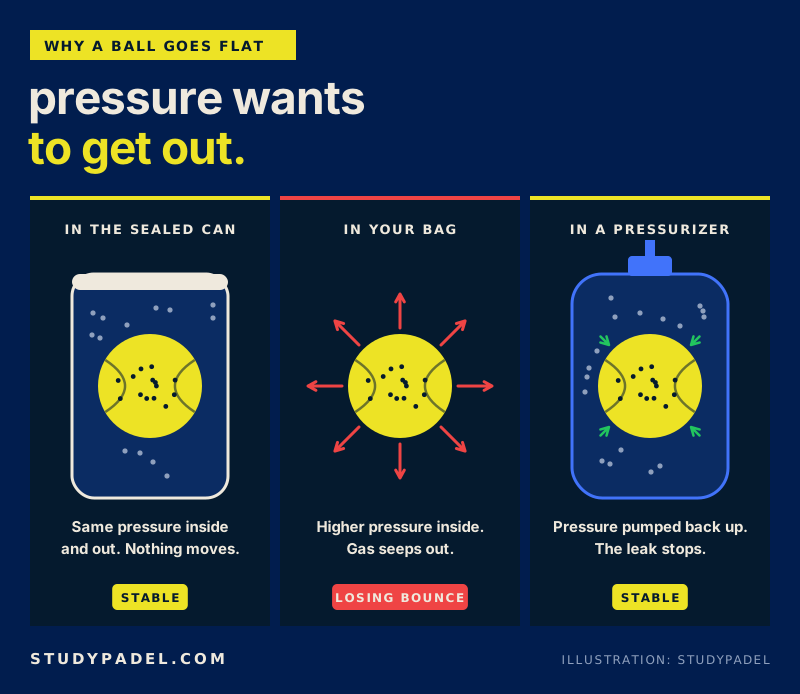
That is why balls are sold in a pressurised can. The gas in the can pushes on the ball as hard as the gas in the ball pushes out, so nothing moves. The hiss when you open a can is that balance ending. From that moment the ball is losing pressure, whether you play with it or not.
How fast? Nobody has published a measurement for padel balls. An old American study of tennis balls found that the rebound did not drop significantly until the balls had been out of the can for about a week. Makers and shops talk about “a few weeks” for an unused ball. Either way, a can opened last month is not the ball the rules describe.
What a pressurizer does
A pressurizer is a small pressure vessel. You put the balls in, close it and pump air in until the pressure around the balls matches or exceeds the pressure inside them.
- If the two pressures are equal, the leak stops.
- If the pressure outside is higher, gas slowly moves back into the ball.
“Slowly” is the important word. This takes hours, not minutes. One maker says to leave balls in for at least a few hours and describes the tube as working best as prevention.
What it cannot do
Three limits are worth knowing before you buy. The first two come from the makers themselves.
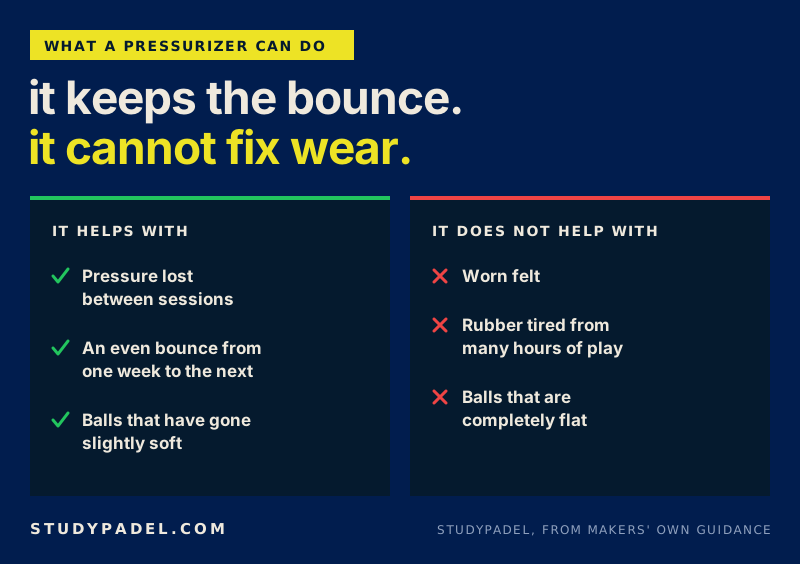
- It does not repair wear. Play does two things to a ball that have nothing to do with pressure. The felt wears down and the rubber softens from thousands of impacts. A ball with good pressure and bald felt still plays badly.
- It can overdo it. One maker warns that balls left a long time in a box set above their own pressure can become too hard, and suggests opening the box a while before you play.
- It will not raise the dead. A ball that has gone completely flat is soft. Put it under pressure and it tends to get squashed instead of refilled. Users who have tried report that reviving flat balls is slow and often fails.
Is there proof?
Less than the marketing suggests.
The strongest evidence we found is a 2025 master’s thesis from the University of Louvain in Belgium. It tested the two pressure-retention products of a Belgian company, Bounce, using compression tests and computer modelling, and concluded that such systems have the potential to significantly slow or even reverse pressure loss. There are three caveats. It studied tennis balls, it covered one company’s products, and the full text is under embargo until 2027, so only the summary can be read.
We found no independent, published test of pressurizers with padel balls.
What we do have is a consistent pattern in what long-term users say. Pressure holds well. Balls still get retired, because the felt and the rubber give out. Players who hit hard notice this sooner.
So the fair summary is that the principle is physically sound and the limited evidence supports it, but the specific numbers in the adverts are unproven.
The products
There are three basic designs: pump tubes, caps that turn the original can into a pressurizer, and automatic tubes or boxes with a built-in pump.
| Product | Design | Holds | Price seen | Notes |
|---|---|---|---|---|
| Head X3 / X4 Pump Pressurizer | Tube with pump | 3 or 4 balls | €37 | – |
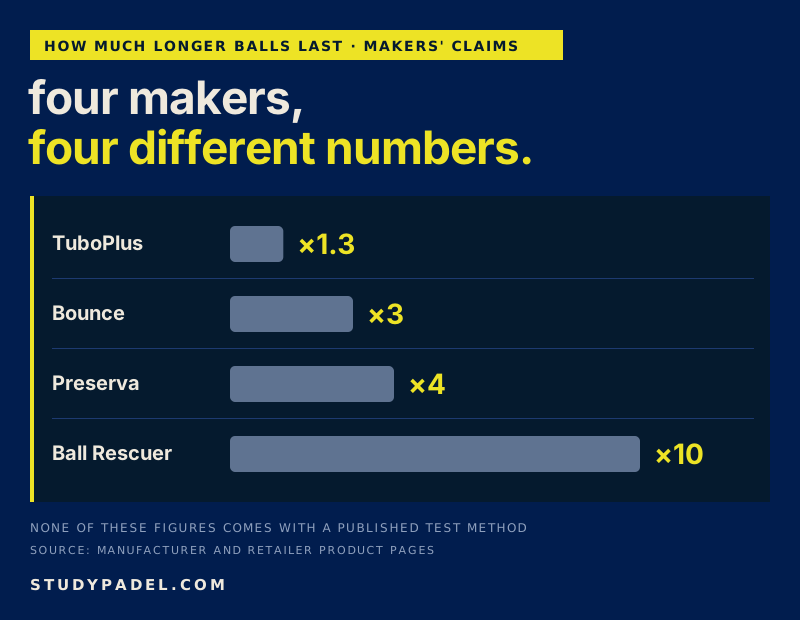
| TuboPlus TuboX3 / X4 Crystal | Tube with pump | 3 or 4 balls | €42–47 | Claims 30% longer ball life. |
| Pascal Box 3B (Bullpadel edition) | Box with hand pump and gauge | 3 balls | €86 | – |
| Bounce Tube (padel version) | Tube with built-in pump | Up to 4 balls | €90–100 | Set for padel pressure. Claims up to three times the ball life (five for the FilterTech version). Separate model for tennis. |
| PressureBox Pro (padel) | Automatic, battery-powered, with pressure sensor | 3 balls | about €90–115 (999–1,299 SEK) | Tops itself up as pressure drops. Claims up to five times the ball life. |
| Preserva Padel | Automatic tube, rechargeable | 3 balls | £70–75 (about €80–86) | Claims at least four times the ball life. |
| Ball Rescuer | Cap that pressurises the original can | 3 or 4 balls | €31–40 | Claims ten times. Works on most padel and tennis cans; runs at about 30 psi. |
Prices are from retailer and maker pages, read on 6 and 7 October 2026.
What the extra money buys is convenience more than physics. A gauge tells you the pressure instead of leaving you to count pump strokes. An automatic box keeps itself topped up. A tube with a built-in pump has no loose parts to lose. Any airtight container at the right pressure does the basic job.
Is it worth the money?
Only one maker shows its working. TuboPlus assumes a player spends €108 a year on balls and saves 30 percent, or about €32 a year.
You can do the sum for yourself with three numbers: the price of the pressurizer, the price of a can, and how many cans you open.
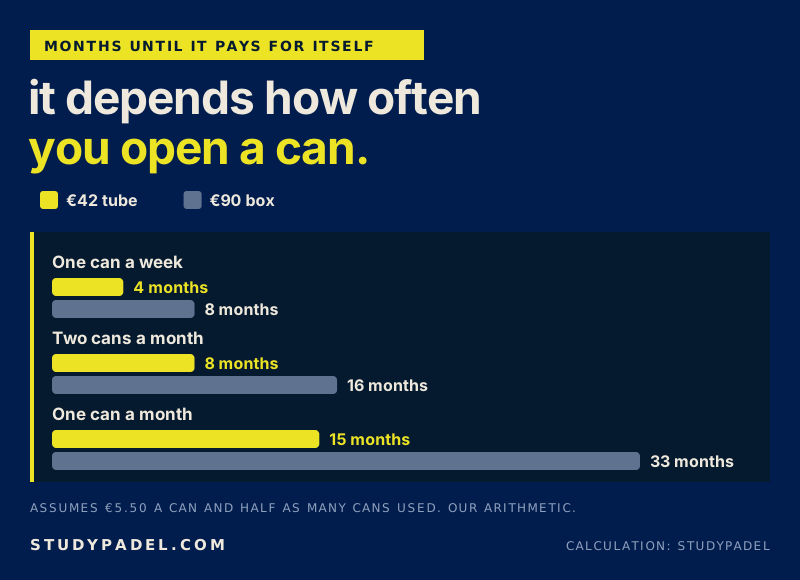
The chart assumes a can costs €5.50 and that the pressurizer lets you open half as many. That halving is our assumption for illustration. Nobody has measured it.
- One can a week. You spend about €285 a year on balls. A €42 tube pays for itself in about four months, a €90 box in about eight.
- Two cans a month. About €130 a year. Eight months for the tube, sixteen for the box.
- One can a month. About €65 a year. Fifteen months for the tube and nearly three years for the box.
Who gets the most from one: players who play once or twice a week and would otherwise open a new can each time.
Who gets the least: people who play every day, because the felt wears out before the pressure does, and people who play now and then, because a fresh can is cheaper than the gadget.
Other reasons to consider one
- Consistency. If you practise with tired balls and then play a match with new ones, everything flies long. Keeping your practice balls close to new makes the switch easier. This is a maker’s argument, but it is a good one.
- Waste. Balls are hard to recycle. Using each can for longer is the simplest way to throw fewer away.
- Altitude. Balls bounce higher in thin air. The rules allow a different ball above 1,000 metres, with a lower bounce of roughly 122 to 135 cm. If you play at altitude, the rules allow clubs to use those.
How to use one well
- Put the balls in straight after you play, starting with the first session.
- Pump to the level the maker recommends. More is not better.
- Leave them for at least a few hours. Overnight is fine.
- If the balls feel too hard when you take them out, let them rest in the open for a while before play.
- Retire balls when the felt looks worn, whatever the bounce.
A quick check you can do at home: hold a stored ball and a new one at head height and drop them together onto a hard floor. If the stored ball bounces clearly lower, it is finished.
New to the game and wondering whether you need one yet? You do not. See our guide to equipment for beginners.
Quick answers
Do padel ball pressurizers really work? They slow or stop pressure loss between sessions, which keeps balls bouncing longer. They do not fix worn felt and they rarely revive balls that have gone completely flat.
What is the ideal pressure for padel balls? The rules set it at 4.6 to 5.2 kg per 2.54 cm², roughly 10 to 14 psi above the surrounding air. Pump a pressurizer to the level its maker recommends, not higher.
How long do padel balls last once opened? They start losing pressure straight away. Most players notice a drop within one to three weeks, sooner with heavy play.
How much does a padel ball pressurizer cost? Pump tubes and caps cost about €31 to €47. Gauge, automatic and premium models cost about €80 to €115.
Can I use a tennis ball pressurizer for padel balls? The basic ones work for both. Some makers sell separate versions set for each sport, because padel balls run at slightly lower pressure.
Can you make a homemade pressurizer? Any airtight container that holds pressure and can be pumped up will do the basic job. The risk is a container that is not made for pressure, so a cheap purpose-made tube is the safer choice.
Is a pressurizer worth it? If you open a can a week, usually yes. If you play once a month, a new can is cheaper.
Sources
- International Padel Federation: Rules of Padel (the ball: size, bounce, pressure and altitude), summarised in our rules guide.
- Hannecart, Extending tennis ball lifetime through inner pressure control, master’s thesis, UCLouvain, 2025 (summary only; full text embargoed).
- A Dynamic Test for Comparison of Rebound Characteristics of Three Brands of Tennis Balls, thesis, Old Dominion University, 1976.
- Maker and retailer pages: Bounce Tube and the maker’s site, PressureBox Pro, Preserva Padel, Ball Rescuer, TuboX3 Crystal, Padel Speed overview, Padel Speak comparison, Tiendapadelpoint guide.
- Prices: product listings at Padelshop and MyPadelLife, read on 6 October 2026.