

Padel Equipment for Beginners: What You Need and What It Costs
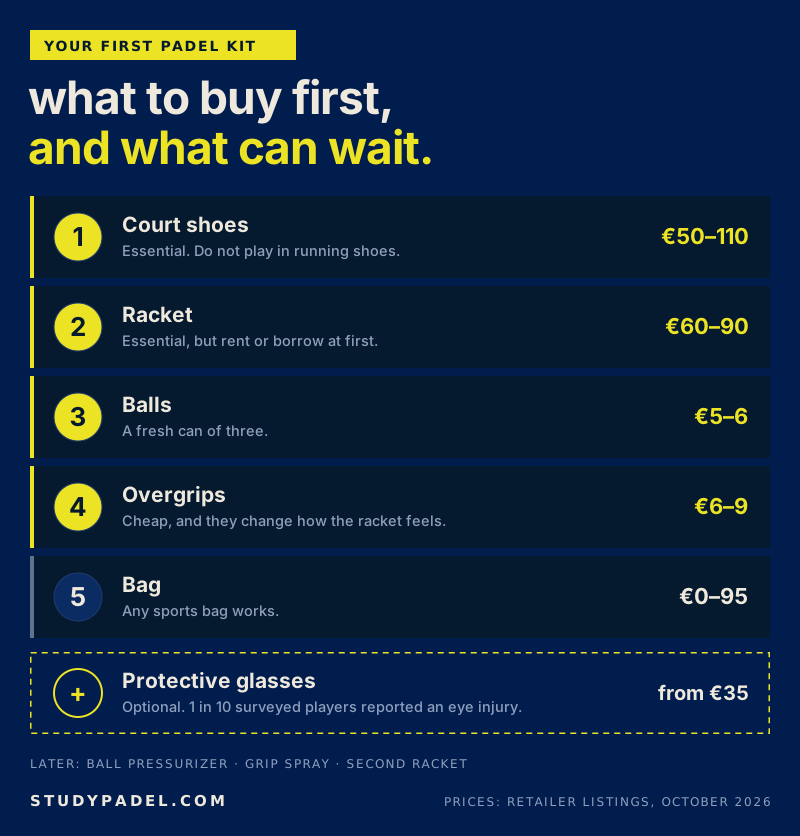
You can start padel with about €60 of your own gear and a rented racket. A complete first kit costs about €120 to €215. Most of that money should go on two things: shoes that grip the court and a racket that is kind to your arm. This guide puts the equipment in order of importance, says what each item should cost, and adds one item most guides leave out.
The short version
- Court shoes. The one thing not to improvise. Herringbone or hybrid sole.
- Racket. Round, soft and light. Rent or borrow for your first few sessions.
- Balls. A fresh can. Old balls make the game harder to learn.
- Overgrips. A few euros, and they change how the racket feels in your hand.
- Bag. Any sports bag works.
- Protective glasses. Optional, and worth knowing about.
Why this order
Shoes come first because you can rent a racket but not shoes. After that, the order follows where padel players get hurt.
A 2023 review in BMJ Open Sport & Exercise Medicine pulled together eight studies covering 2,022 players. It found 3 injuries for every 1,000 hours of training and 8 for every 1,000 matches. The elbow was the most common site, followed by the knee, the shoulder and the lower back. Most were tendon and muscle injuries.
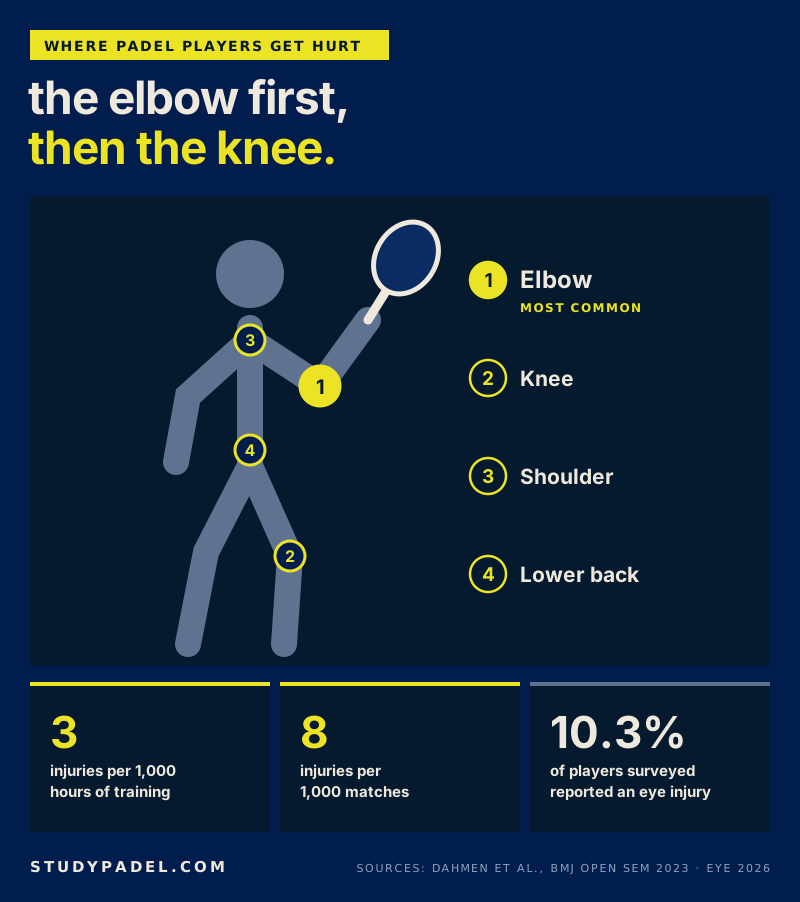
No study proves that a particular shoe or racket prevents these injuries, and nearly all the research is on amateurs. But the pattern points at two sensible precautions. Wear shoes built for sideways movement, because your knees and ankles take the load. And use a racket that does not send a hard shock up your arm.
1. Padel shoes
A padel court is artificial grass with sand brushed into it. You move sideways, stop, pivot and push off, over and over. Running shoes are built to go forwards. They have soft, high soles and no support at the sides, and they will roll under you on a padel court. Every shoe guide we read agrees on this.
What to look for is the pattern on the sole.
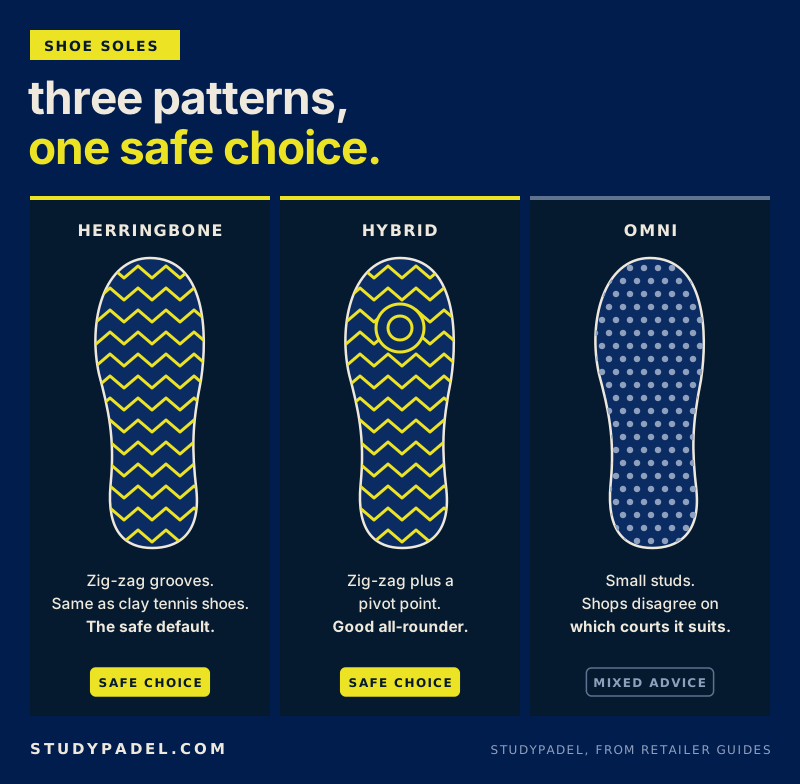
- Herringbone. A zig-zag pattern. It grips when you push off and lets you slide a little when you brake. It is the same sole as a clay-court tennis shoe.
- Hybrid. Zig-zag with other shapes mixed in, often a round pivot point under the ball of the foot. Hybrid soles are increasingly common.
- Omni. Small studs. Here the advice falls apart. One large retailer says omni soles are made for sand-filled courts. Another says they suit courts with little sand. A third recommends herringbone or hybrid as the default.
Our reading: choose herringbone or hybrid and ignore the argument.
If you already own clay-court tennis shoes, use them. They have the right sole. Hard-court tennis shoes will do for a session or two, but grip less. Running and gym shoes are not.
What it costs. Across two large online catalogues, most padel shoes sit between €80 and €140. Entry models start around €50. A beginner does not need more than a mid-range pair.
2. A beginner padel racket
Almost every club rents rackets for a few euros. Do that, or borrow one, for your first sessions. You will choose better once you have hit a few hundred balls.
When you buy, look for four things.
- A round shape. The weight sits low and the sweet spot is large and central, so off-centre hits still go back.
- A soft core. It gives the ball easy depth without a big swing, and usually feels gentler on the arm.
- Glass-fibre faces. Softer and cheaper than carbon.
- A lighter weight. Rackets run from about 330 to 400 grams. Stay at the lighter end until your arm is used to the game.
Do not buy the racket a professional uses. Those are diamond-shaped, hard and head-heavy. They are built for players who hit the middle of the racket every time and generate their own power. In a beginner’s hand they are harder to control and can feel harsher on the arm.
A first racket should cost about €60 to €90: the middle half of the beginner rackets in our database sits between €70 and €90. We list eight that fit, with their specs and prices, in the best padel rackets for beginners. Every racket comes with a wrist cord, and the rules require you to wear it.
We explain shapes, materials and the marketing in how padel rackets are made. To compare models and current prices, see all padel rackets or browse by brand.
3. Padel balls
Padel balls look like tennis balls. They are not the same. The rules set a diameter of 6.35 to 6.77 cm and a weight of 56.0 to 59.4 grams, and a new ball must bounce between 135 and 145 cm when dropped from 2.54 metres. That is a slightly smaller, slightly lower-bouncing ball than in tennis.
Balls matter more to beginners than people expect. A ball that has lost pressure sits low and dies off the glass, which makes rallies shorter and the walls harder to learn. Balls start losing pressure as soon as the can is opened.
A can of three costs €5 to €6. Open a fresh one every few sessions. If you play every week, a pressurizer can stretch each can further. That is a later purchase, covered in our guide to ball pressurizers.
4. Overgrips
An overgrip is a thin strip of tape that you wind over the racket’s handle. It does three jobs.
- It soaks up sweat, so the racket does not turn in your hand.
- It adds a slightly tacky surface.
- It lets you adjust the thickness of the handle. One overgrip suits most hands. Add a second if the handle feels thin.
Rackets come with a base grip but usually no overgrip. Put one on before you play. Replace it when it looks shiny or feels slippery. For most people that is every few weeks.
A pack of three costs €6 to €9. White ones show when they are worn.
A handle that slips makes you squeeze harder, and coaches generally link a tight grip to sore forearms and elbows. No padel study has measured that, so treat it as the standard advice it is. If your hands still slip on a fresh overgrip, there are sprays for that. See our guide to grip spray.
5. A padel bag
Any sports bag or backpack will carry a racket, shoes, balls and a water bottle. You do not need a padel bag to start.
If you do buy one, two features are worth having: a separate pocket for shoes, so sand stays away from everything else, and a padded pocket for the racket. Entry-level padel backpacks start at about €20 to €25, and most bags cost between €45 and €95.
One habit matters more than the bag. Do not leave your racket in a hot car. The foam in the core changes with temperature, and heat is hard on it.
6. The item nobody mentions: eye protection
This is the part most equipment guides skip.
In a survey of 583 Italian padel players published in the journal Eye in 2026, 10.3 percent said they had suffered at least one eye injury while playing. Nine in ten of those were hit by the ball. A quarter of the injured players described lasting effects on their quality of life, and one in ten said they had had eye surgery. The survey was answered by volunteers, so the true rate may differ, but the injuries are real.
Eye doctors at the University of Gothenburg raised the same concern in 2021 after seeing cases rise in Swedish clinics. They pointed out that the ball is about the size of the eye socket and that a smash can reach 130 km/h. Most injuries are mild. Their advice was to wear protective glasses, pointing to studies in other high-risk sports where correctly used eye protection cut injuries by up to 90 percent.
Why padel in particular? Four people stand close together, the ball comes off glass at odd angles, and beginners at the net are often looking the wrong way.
Few players like the idea. In the Italian survey fewer than one in ten strongly supported protective eyewear. If you want it, look for sports glasses with impact-resistant polycarbonate lenses. Ordinary sunglasses are not the same thing. Protective models start at about €35.
We are not saying you must wear them. We are saying you should know the numbers before you decide.
Once you have the basics, the how to play guides and how to improve as a beginner cover what to do with them.
What can wait
- A ball pressurizer. Useful once you play weekly.
- Grip spray. Only if a fresh overgrip does not solve slipping.
- A second racket. For when you compete.
- Wristbands, frame protectors, special socks. Cheap extras, not essentials.
- Padel clothing. Any sports clothes work. Shorts or a skirt with pockets are handy for the second ball.
What a first kit costs
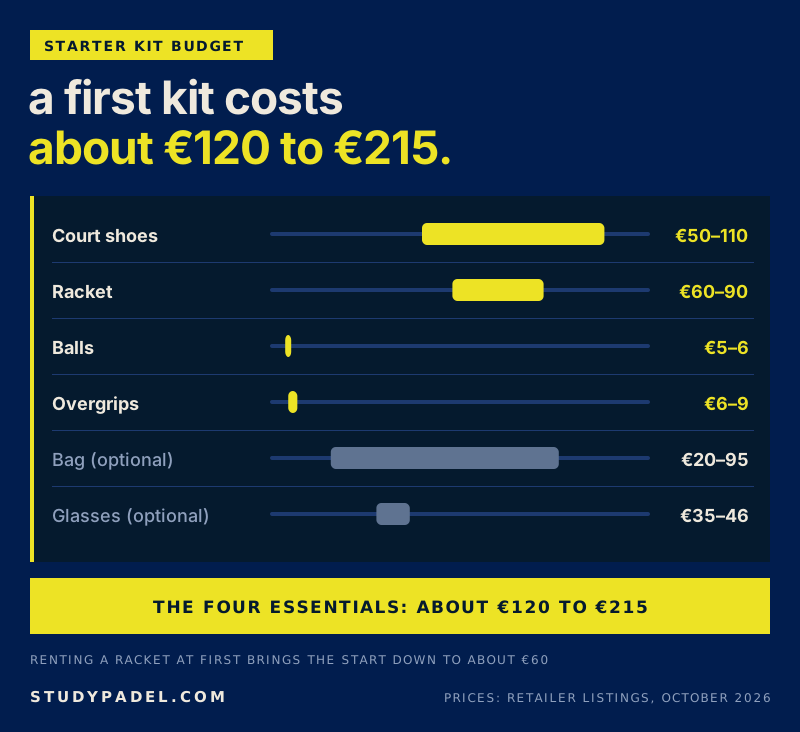
| Item | Priority | Typical price |
|---|---|---|
| Court shoes | Essential | €50–110 |
| Racket | Essential, or rent | €60–90 |
| Balls | Essential | €5–6 a can |
| Overgrips | Essential | €6–9 for three |
| Bag | Any bag works | €0–95 |
| Protective glasses | Optional | from €35 |
Prices are from online retailers in October 2026 and will move.
If you rent a racket at first, you can start with shoes, balls and overgrips for about €60.
Quick answers
What equipment do I need to start padel? Court shoes, a racket, balls and an overgrip. A bag and protective glasses are optional.
Can I play padel in tennis shoes? Clay-court tennis shoes, yes: they have the same herringbone sole. Hard-court tennis shoes will do for a few sessions. Padel shoes are the better buy once you play regularly.
Can I play padel in running shoes? You should not. Running shoes have no sideways support and the wrong sole for a sand-filled court. Clay-court tennis shoes are fine.
What padel racket should a beginner buy? A round, soft, light racket with glass-fibre faces, at about €60 to €90. Rent one first if you can.
Are padel balls the same as tennis balls? No. Padel balls are slightly smaller and bounce lower. Use balls made for padel.
How much does it cost to start playing padel? About €60 if you rent a racket, and about €120 to €215 for your own shoes, racket, balls and overgrips.
Should I wear glasses to play padel? It is your choice. About one player in ten in a 2026 survey reported an eye injury, and eye doctors recommend impact-resistant sports glasses.
Sources
- Dahmen and others, Incidence, prevalence and nature of injuries in padel: a systematic review, BMJ Open Sport & Exercise Medicine, 2023.
- Ocular injuries in padel: findings from a survey on frequency, risk factors, and perceptions toward protective eyewear, Eye, 2026.
- University of Gothenburg: Major risk of eye injuries from padel, research ophthalmologists say (2021).
- International Padel Federation: Rules of Padel (the ball and the racket), summarised in our rules guide.
- Shoe guides: Tennis Warehouse, Tennisnuts, Padelshop, Padel USA.
- Prices: product listings at Padelshop, MyPadelLife and the Nox online store, read on 6 October 2026.