

Volt
Volt racket ranges
6 ranges
Pros playing with a Volt racket
1 player
Volt questions
Which pro plays with a Volt racket?
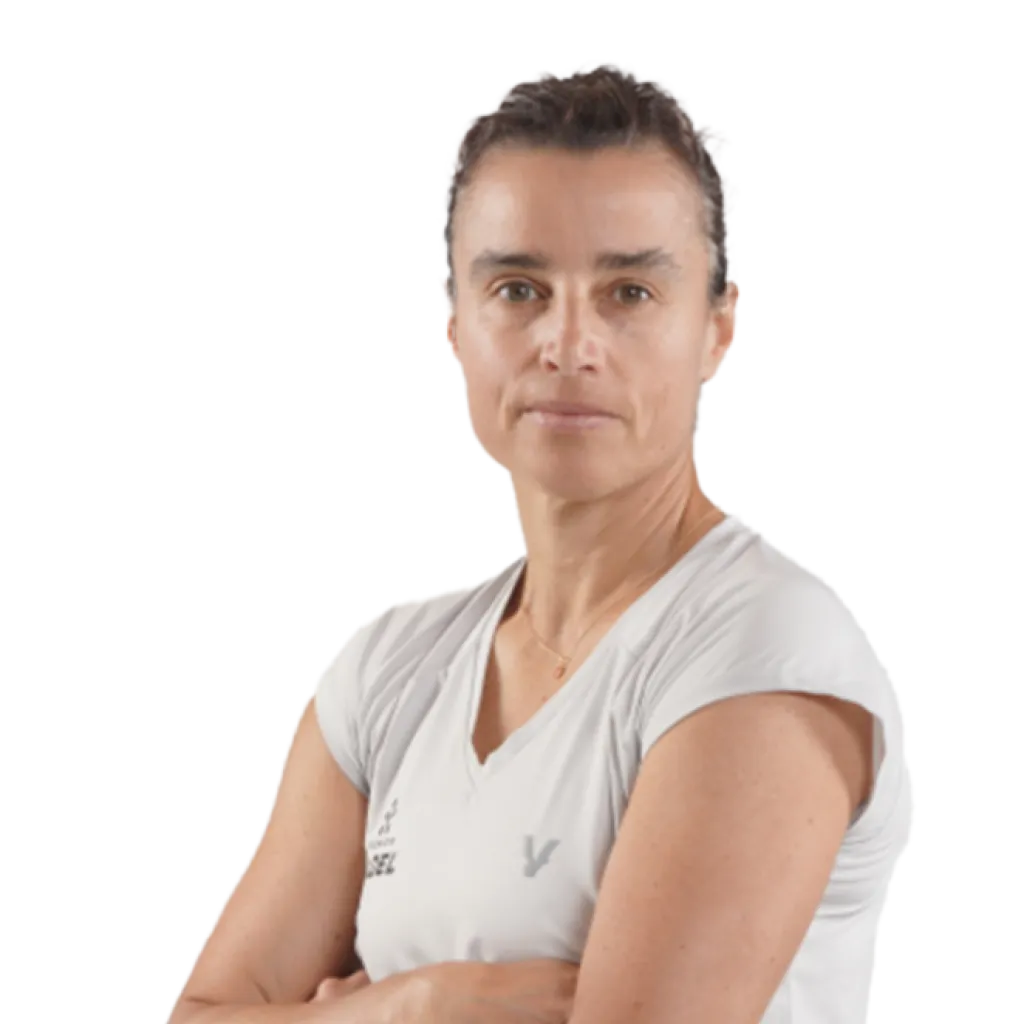
Ana Catarina Nogueira plays with a Volt racket on the professional tour.
What racket ranges does Volt make?
Volt builds 1 racket range — 500. Each range has several models tuned to different playing styles.
How many Volt rackets are there?
We track 6 Volt rackets currently listed by the retailers we follow, across every range and model year.
Why does Volt make so much of design?
Because it is the only axis on which a new brand can differentiate honestly. Carbon faces and EVA cores come from a limited number of factories to broadly similar specifications, so a start-up claiming a materials breakthrough is usually claiming something it cannot support. Design is a real difference a small company can own, and padel's visual conventions left an obvious gap.
What does a minimalist racket actually change for a player?
Nothing about how it plays, and something about who buys it. Construction is unaffected by the paint, so the performance argument is the same as for any comparable frame. What changes is the buying decision: a meaningful group of players dislike the airbrushed convention and have had almost no alternative, and serving them is competing for a market rather than for a specification.
How does a Portuguese brand compete with the Spanish giants?
By not competing on the same ground. It cannot match them on tour presence, retail coverage or catalogue depth, so it sells appearance and consistency to buyers who were not choosing on those grounds anyway. Exporting from the start rather than building a home base was the necessary consequence, given how small the Portuguese market is beside Spain's.
What should a buyer expect from Volt's construction?
Conventional, competently made frames rather than experiments. Carbon hitting surfaces over EVA cores, in the standard three shapes, with hardness and balance varying across the line the way the rest of the industry does it. That is the point: the proposition depends on the frames being unremarkable to play and distinctive to look at.
About Volt
Most padel rackets are loud. The category's visual convention is airbrushed gradients, generation numbers and as much surface detail as the printing allows, and Volt was started because its founders thought that was a problem worth solving. The company was established in Porto in 2016 by Pedro Brito e Cunha, and its argument is straightforward: a racket is carried, leaned on and looked at far more than it is swung, and a proportion of buyers would rather it were quiet.
That is a design position rather than an engineering one, and the company is honest about it. The frames use the same construction as everyone else's, carbon fibre hitting surfaces bonded to EVA cores in the standard round, teardrop and diamond shapes, because materials are not where Volt is trying to differentiate. What it controls is finish, colour and restraint, and it has been consistent about that from the beginning rather than drifting towards decoration as it grew.
Portugal is a small padel market next to Spain, so the brand was export-led almost immediately. The great majority of its sales are outside Portugal, spread across dozens of countries, which for a company of its size is a harder achievement than domestic growth would have been. It also means the brand is met through specialist retailers and online rather than on a nearby shelf.
Volt suits a player who has decided what shape they want and would rather not advertise it. It gives up the tour visibility and the deep back catalogue of the Spanish flagships, and offers in exchange a coherent look and construction that needs no apologising for.
Further reading
How to Choose a Padel Racket: Shape, Weight, Balance and Feel
How to choose a padel racket: round, teardrop or diamond, weight, balance and hardness, matched to your level. With what 188 rackets actually cost.
October 8, 2026
Best Padel Rackets for Beginners (2026): What to Buy and Why
The best padel rackets for beginners in 2026: what to look for, what to pay (most cost €60–90) and 8 round, soft models from our database.
October 8, 2026
What Rackets Do the Pros Use? Top 100 Players' Rackets (2026)
What padel rackets do the pros use? The racket of each of the top 100 men and women, plus the shapes, brands and hardness they choose, from our data.
October 8, 2026