

How Long Does a Padel Racket Last? Signs It Is Time to Replace It
The short answer. Nobody has measured it. There is no published study of how long a padel racket lasts, and every figure you see is a rule of thumb. As a rough guide, a club player who plays two or three times a week gets about a year from a racket, and someone who plays less gets longer. A racket dies gradually as its core loses its rebound, unless it cracks first. A crack in the frame means replacing it. A paint chip does not.
Padel racket lifespan at a glance
| How often you play | Rough lifespan | What usually goes first |
|---|---|---|
| Once a week or less | 1.5 to 2 years, often more | An accident, or nothing at all |
| Two or three times a week | About a year | The core loses its rebound |
| Four or more times a week | Months | The core, then the frame |
A rule of thumb, not a measurement. The figures online range from one year to four for the same kind of player.
Search for this question and you will find confident numbers: “50 to 150 hours”, “12 to 18 months”. None of them comes from a test. Retailers and magazines give ranges based on experience, and those ranges do not agree with each other. One Spanish magazine puts the average at about a year. One retailer says one to two years for frequent players and three to four for occasional ones. Another says a once-a-week beginner can stretch a racket to four years.
So treat the table as a starting point. What matters more is knowing what wears out and how to tell.
What actually wears out in a padel racket
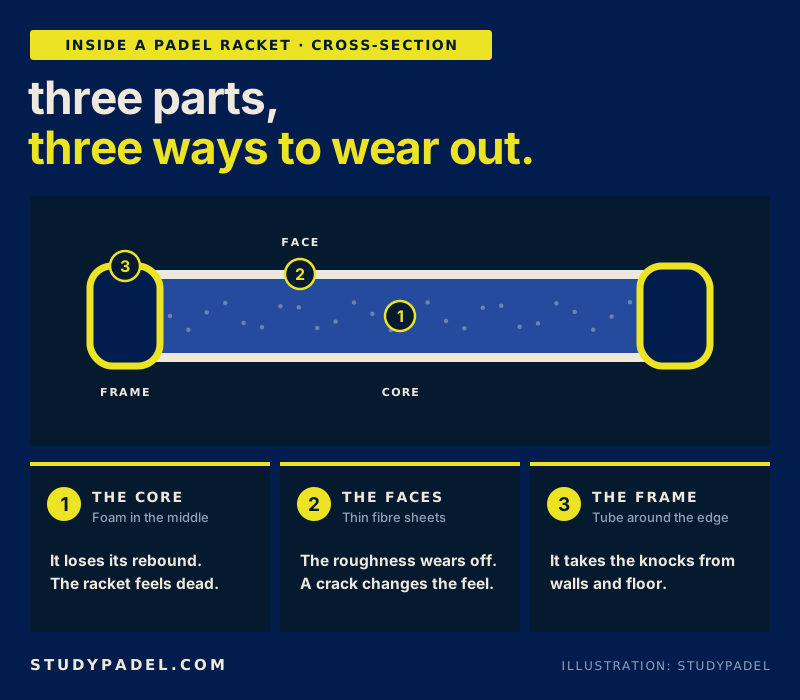
A padel racket has three parts, and each wears differently. Our guide on how padel rackets are made explains what each one is.
The core. The foam in the middle is compressed and released thousands of times. Over months it stops springing back as it did. The racket does not break. It goes quiet: less depth for the same swing, and a duller sound. This is what players mean by a dead racket.
The faces. The thin sheets of fibre on each side take every hit. A rough surface wears smooth, which costs you spin. A hard impact can crack a face.
The frame. The tube around the edge is what meets the wall, the floor and occasionally your partner's racket. Most visible damage is here, and most of it is cosmetic.
Heat speeds all of this up. The core is a foam and the faces are held together by resin, and neither likes a car boot in summer. Retailers' warranty terms exclude damage from extreme heat for that reason.
Signs your padel racket is dead
No single sign is proof. Two or three together are.
- Less depth. The same swing sends the ball shorter than it used to.
- A duller sound. The crisp note on a clean hit has gone flat.
- A worn surface. The rough finish feels smooth where you hit most.
- Soft spots. Press the face with your thumbs. One area gives more than the rest.
- A rattle. Something loose inside the frame or the handle.
- Cracks, which get their own section below.
If you can, compare it with a newer racket of the same model. The difference is obvious side by side and easy to miss on its own, because the change is gradual and you adapt to it.
Cracked padel racket: can you still play with it?
It depends where the crack is.
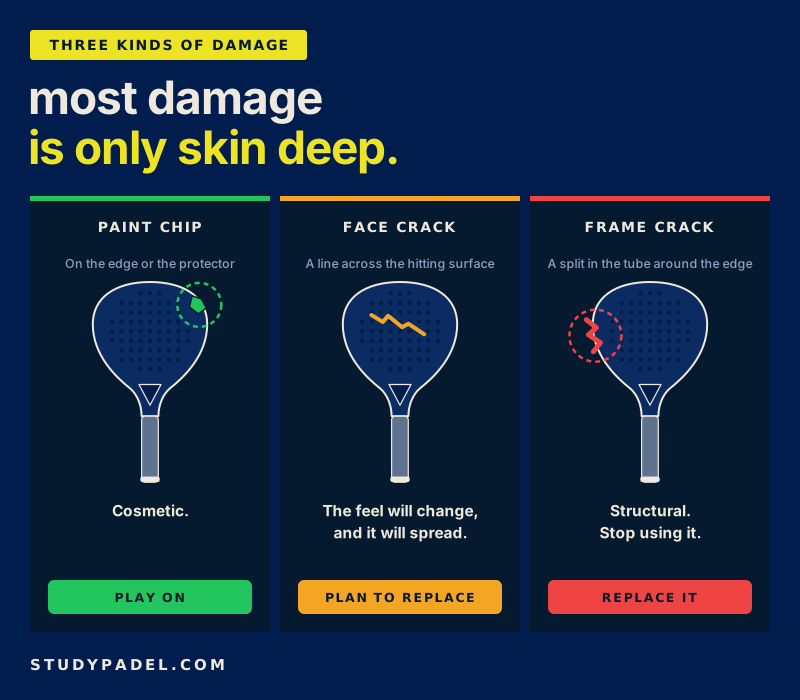
- Paint chips and scuffs on the edge. Cosmetic. Every racket that is used gets them. Play on.
- A crack in the face. The racket will still work for a while, but the feel changes and the crack will spread. Start looking for a replacement.
- A crack in the frame. This is structural. The frame is what holds the racket together, and a cracked one can fail suddenly. Stop using it.
Most of what worries people is in the first group. If you are unsure whether a mark is paint or a crack, press gently on either side of it. A crack moves or clicks. Paint does not.
Can a padel racket be repaired?
Sometimes, and not back to new.
Some shops and specialists offer repairs. They typically fill and reinforce a crack in the frame or patch a face. No repair restores a tired core, and any repair adds material, so expect the weight and balance to change.
A repair makes sense for an expensive racket with little use and a clean break. For a beginner racket that cost €70, or a racket that was already going dead, it does not.
How to make your racket last longer
- Fit an edge protector. It takes the scrapes instead of the frame. It adds a few grams at the top of the racket.
- Keep it out of the heat. Not in the car, not in the sun between matches.
- Use a cover or a bag. Most damage off the court happens in transit.
- Do not hit the wall or the floor. Easier said than done, but scraping low balls off the glass is how many frames get damaged.
- Dry it if you play in the rain or the grip is soaked.
- Rotate rackets if you play four or five times a week.
Edge protectors and bags are covered in padel equipment for beginners.
Does a more expensive racket last longer?
Not necessarily.
Carbon faces are stiffer than glass fibre and generally keep their shape longer. But stiffer is not the same as tougher. A hard, light, high-performance racket is not built to survive a blow against a concrete wall any better than a cheap one, and its core wears out just the same. Price buys performance. It does not buy durability.
Warranty and fakes
Warranty. Racket warranties typically run 6 to 24 months, depending on the brand, and cover manufacturing defects that appear in normal play. They do not cover impact damage, misuse or wear. A crack with a scuff mark next to it will usually be judged an impact. Keep your receipt, and if a racket fails early without a knock, contact the shop you bought it from.
Fakes. Players regularly ask online whether a racket they bought cheaply is a fake. The main warning sign is a price far below what every other shop charges. Buy from an authorised retailer and the question does not arise.
Time for a new one?
A replacement costs a beginner about €60–90 and a regular club player about €100–170, going by the prices we track.
- How to choose a padel racket explains shape, weight and hardness.
- The best padel rackets for beginners lists eight starter models.
- The best padel rackets for intermediate players groups ten by playing style.
Current prices are on our racket pages.
Quick answers
How long does a padel racket last?
There is no measured answer. As a rule of thumb, about a year if you play two or three times a week, longer if you play less and only months if you play almost every day.
How do I know if my padel racket is dead?
The ball goes shorter for the same swing, the sound is duller and the surface has worn smooth. A soft spot on the face or a crack settles it.
Can you play with a cracked padel racket?
With chipped paint, yes. With a cracked face, for a while, though the feel will change. With a cracked frame, no: it can fail suddenly.
Can a padel racket be repaired?
Cracks can often be repaired, but the racket will not be as it was, and its weight and balance will change. A worn-out core cannot be repaired.
Do padel rackets go bad if not used?
There is no evidence of a fixed shelf life. How a racket is stored matters more than how old it is: somewhere cool and dry is fine, and a hot car or a damp garage is not.
Sources
- No published study of padel racket lifespan was found. The lifespan table is a rule of thumb.
- Trade guidance with differing ranges: Padel Addict (about a year on average), Tiendapadelpoint (1–2 years for frequent players, 3–4 for occasional ones) and Padel Pro Shop (up to four years at once a week).
- Warranty practice: Padel USA and Tiendapadelpoint.
- Care advice: Padel Addict.
- Prices: StudyPadel racket database, one retailer, 7 October 2026.